
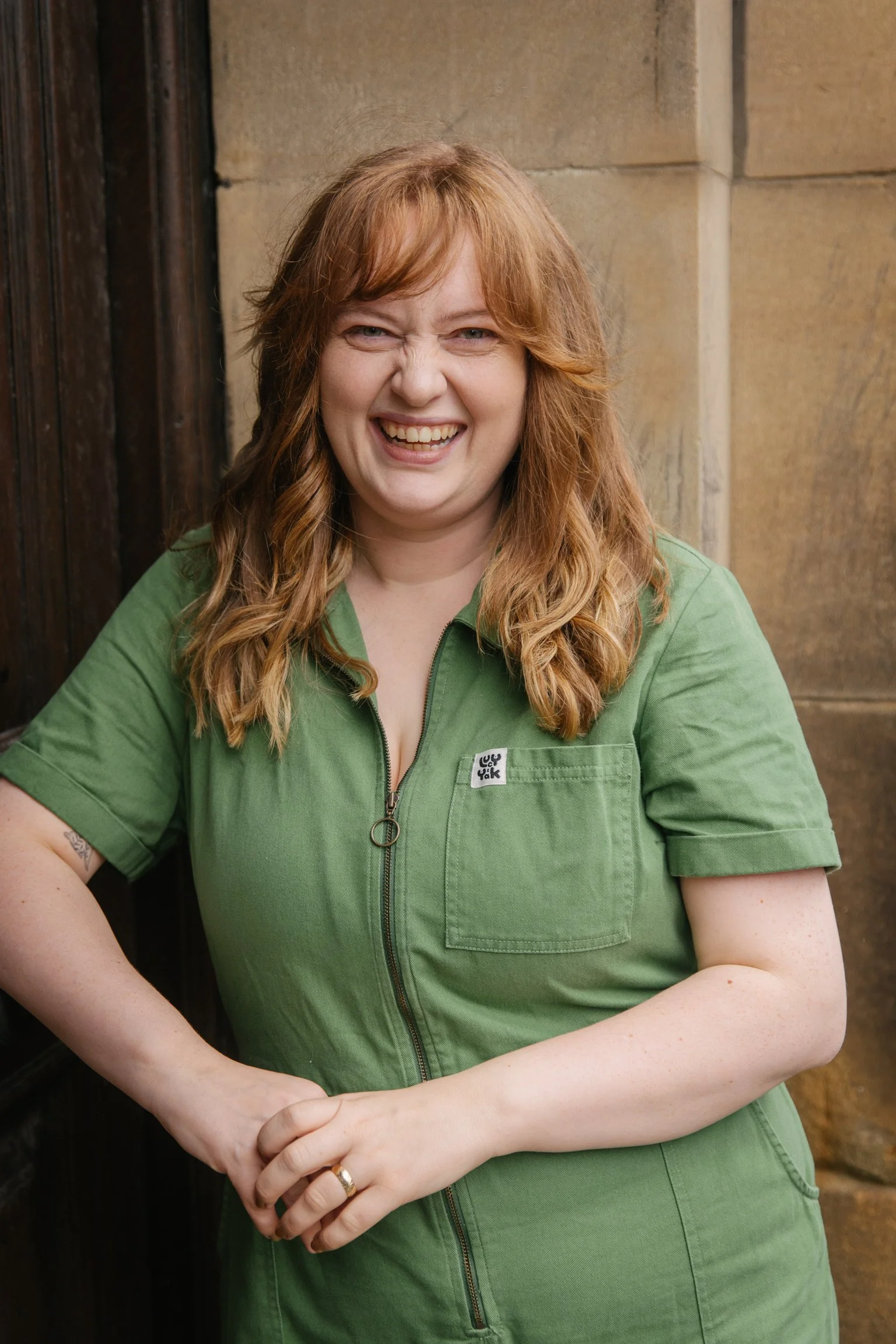
Hi, I'm Alice. Dr Alice Ashcroft, if we're being formal.
I study the gender hidden in our language. The sort of thing you don't see until someone points it out, and then you can't unsee it.
Here's an example. "A female surgeon performed the operation." Read that again. You can't say "a male surgeon" without sounding strange, because the word "surgeon" already defaults to male in most people's heads. So "female" has to do extra work. The work it's doing is marking her as the unusual one.
I find these patterns in news headlines, job ads, chatbot scripts, software engineering meetings, AI training data, and the sentences we all write without noticing. I've been finding them for about a decade.
How I got here
I did my PhD at Lancaster on gender diversity in digital innovation. It started as my undergraduate dissertation and then refused to be finished.
The original question was "why aren't there more women in tech." By the end it was "what is the language doing to keep things this way."
I've published academic papers on hedging as a feminist issue in software engineering, the gendered design of chatbots (the default-female ones), intersectionality in HCI research, and how environmental frameworks can be borrowed for more inclusive design. That work won Best Paper at BCS HCI 2023.
It's also boring to read if you don't have a PhD, which is why I started writing for everyone else.