
The Midnight Train by Matt Haig: A Review
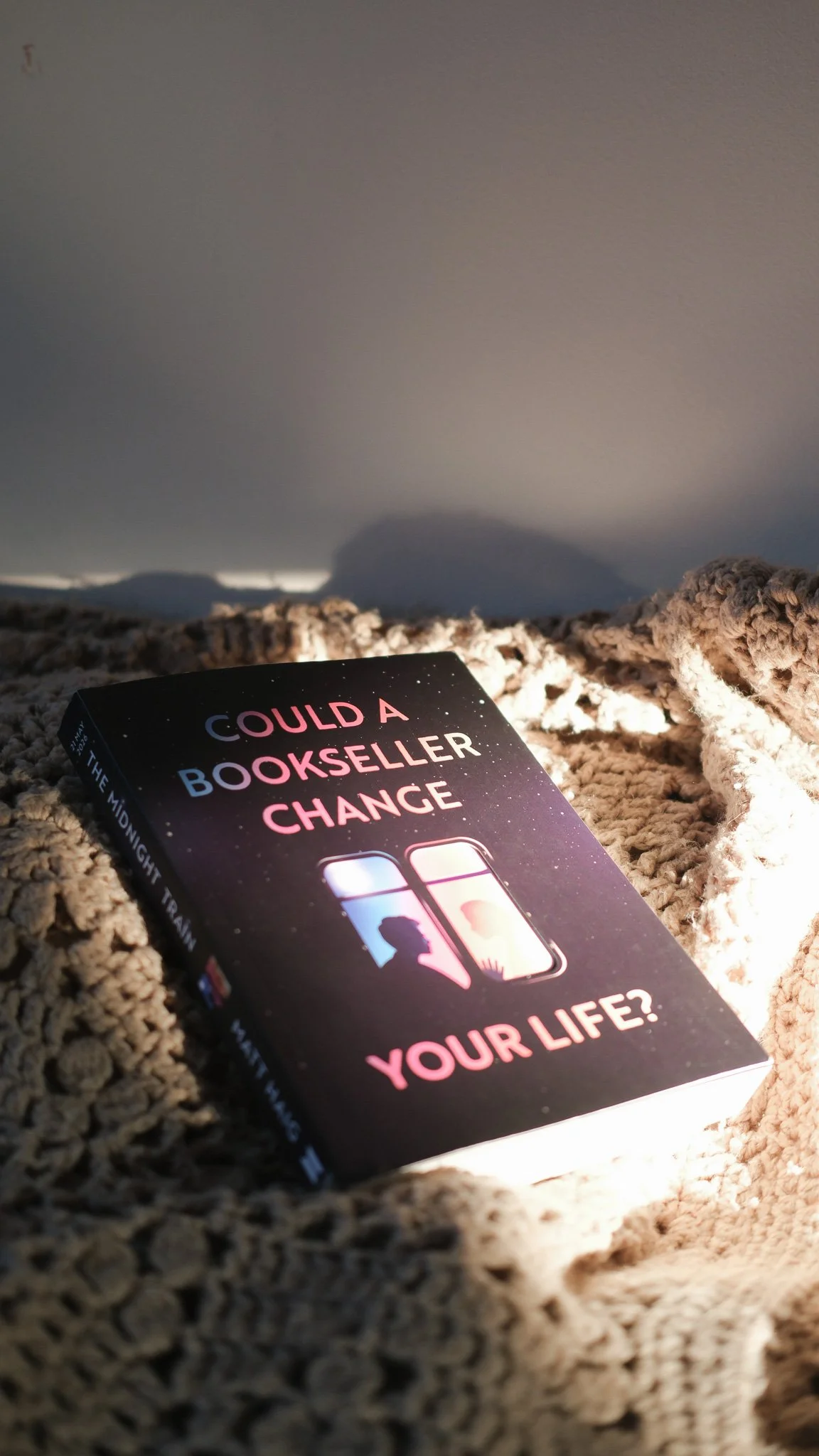
There's a video on my Instagram I almost didn't post. It's just me, smiling, saying six words: "a book that feels like this song." The song is a string version of "The Night We Met" — the one from Benedict's season of Bridgerton, the one that turns a quiet ache into something orchestral. I couldn't think of a better way to describe how Matt Haig's new novel, The Midnight Train, feels to read.
If you've landed here because you typed "Midnight Train review" or "is The Midnight Train a sequel to The Midnight Library" into Google, I'll give you the quick answers first and then the long ones. Because this book deserves the long ones. And I’m so grateful for the ARC his publishers sent.
Is The Midnight Train a sequel to The Midnight Library?
No — but almost.
The Midnight Train is a standalone novel. You do not need to have read The Midnight Library to love it, to follow it, or to be completely wrecked by it. The story belongs to a man called Wilbur, who is desperate to travel back to his wife Maggie. His grief, his love, and his choices are the heart of the book.
That said, careful readers of The Midnight Library will find something waiting for them here. Nora Seed does make an appearance. She arrives at exactly the moment the book needs her, not in a gimicky way, she does exactly what only she could do, and then she leaves the story better than she found it. I won't say more than that.
So: not a sequel, but not unrelated either. Matt himself has described it as a return to the world of The Midnight Library, and you feel that resonance from the first page.
What is The Midnight Train about?
Without giving too much away: Wilbur has lost Maggie. He finds a way (the train from the title, glinting with Haig's particular brand of gentle magical realism) to try and reach back into his own past and change what happened.
The book is a love story, a grief story, a time-travel story, and (because this is Matt Haig) a quiet, insistent meditation on how to be alive when being alive feels impossible.
If The Midnight Library asked "what if you could have lived differently?", The Midnight Train asks: what do you do with the life you did live?
Is The Midnight Train as good as The Midnight Library?
Here's where I have to be careful, because I genuinely love all of Matt's books. The Midnight Library is the one that changed his career and changed a lot of readers' lives. The Comfort Book sits on my bedside table. Reasons to Stay Alive has done more good in the world than most medicine.
But if you want my honest answer, I think The Midnight Train is better.
And I think the reason is embedded in the titles themselves.
A library is a building you walk into. You pull books off shelves. You imagine what might have been. A library looks sideways, at the shelf of lives running parallel to the one you're living. It is beautiful, and it is essentially a book about what-ifs.
A train moves. It has a direction. It carries you forward even when it's taking you somewhere you thought you'd left behind. The Midnight Train is a book about what you do next, about momentum, about return as a form of progress, about the way grief is less a room you sit in and more a journey you're forced to take.
As someone who has always been a little afraid of the permanence of life decisions (that awful feeling that every choice closes off a hundred other lives is something my therapist hears a lot) The Midnight Library spoke to me. But The Midnight Train soothed me. It didn't offer me another life. It made a quiet, devastating case for the one I'm already in.
That's a harder trick to pull off. And Matt Haig pulls it off. Of course he does.
The letter that made me sob
I need to tell you about the crying.
I have not cried at a book like I cried at The Midnight Train since I read Sunrise on the Reaping. I cried at a letter.
There is a letter in this book (I won't say whose, and I won't say when, sorry to be so vague) that pulls on every thread Matt Haig has patiently laid throughout the novel and knots them into something unbearably human. It felt real. It felt like a letter I had received, or written, or should have written, or hoped someone would one day write to me.
It is the kind of writing that reminds you why language matters at all: that the right words, in the right order, can reach into the middle of a stranger's life and rearrange the furniture.
I sobbed. I re-read it. I sobbed again. If you only come to The Midnight Train for one thing, come for this letter.
So, should you read The Midnight Train?
Yes. Especially if any of this sounds like you:
You loved The Midnight Library.
You've never read Matt Haig and you want to start with something that will make you sob.
You're going through something — a grief, a decision, a what if I'd stayed, what if I'd gone spiral.
You have ever loved a person and been afraid of losing them.
A gentle heads-up: like most of Matt's work, The Midnight Train walks through grief and loss with real weight. It is ultimately a hopeful book (Matt Haig is incapable of writing a hopeless one) but it doesn't arrive at hope cheaply. Read it when you have a little space to feel things. Ideally with tissues. Ideally not on public transport, though there's a poetic case to be made for exactly that.
The book that’s as beautiful as an orchestra…
Back to that video.
The reason I made it (the reason I couldn't think of a way to review this book in words before I'd first reviewed it in music) is that some books don't read like novels. They read like songs you used to know and had forgotten. The Midnight Train is one of those.
"The Night We Met" is a song about wishing you could go back to a moment. The string version (the Bridgerton one, the one that turns longing into a full orchestra) is just beautiful. A symphonic ache for a person you can still feel in the shape of your own life. That is the book. That is exactly the book.
Want more on the power of words?
The Midnight Train is, at its heart, a book about how words (a letter, a name said out loud, a goodbye spoken too late or not at all) can carry the weight of a whole life.
And that’s my whole thing.
Sign up to my newsletter here for essays on the quiet, extraordinary power of the words we use (and the ones we don't). I write about language and the power of words.
Come and cry with me there, too.
